I booked the bubble dome in October, three months ahead, for two nights in mid-January. The price was €220/night, which was less than I expected — December and March are the expensive aurora months, and January sits in a weird valley where the daylight is shortest (4.5 hours) but the prices drop because most people don't want to fly to Iceland in the dark. I did. I wanted the aurora, and I wanted to see what glamping in a heated bubble in a gale actually feels like. Here's what happened, night by night.
Arrival: 3pm, Already Dark, Already Windy
The dome was 40 minutes from Keflavík airport on the Reykjanes peninsula. I'd rented a Dacia Duster 4x4, which was the cheapest 4x4 available and which I'd recommend to anyone going to Iceland in winter — not because it's a great car but because it's the car that will be available when everything else is sold out. The last 3 kilometers to the dome were on a gravel road that was frozen solid, which was actually easier than mud would have been. The wind was already at maybe 40km/h, strong enough that opening the car door required two hands.
Check-in was self-service: a key code on a door, a printed sheet on the table, and a text from the owner saying "dome is heated, hot tub is on, aurora forecast tonight is Kp 3." The dome was a transparent acrylic bubble on a wooden platform, maybe 4 meters across, with a double bed, a small heater unit, a tiny table, and a private bathroom in a small attached structure. The bathroom was heated. The bubble was heated. The space between the bathroom door and the bubble was not, and that 2-meter walk at 2am was the coldest 2 meters of my life.
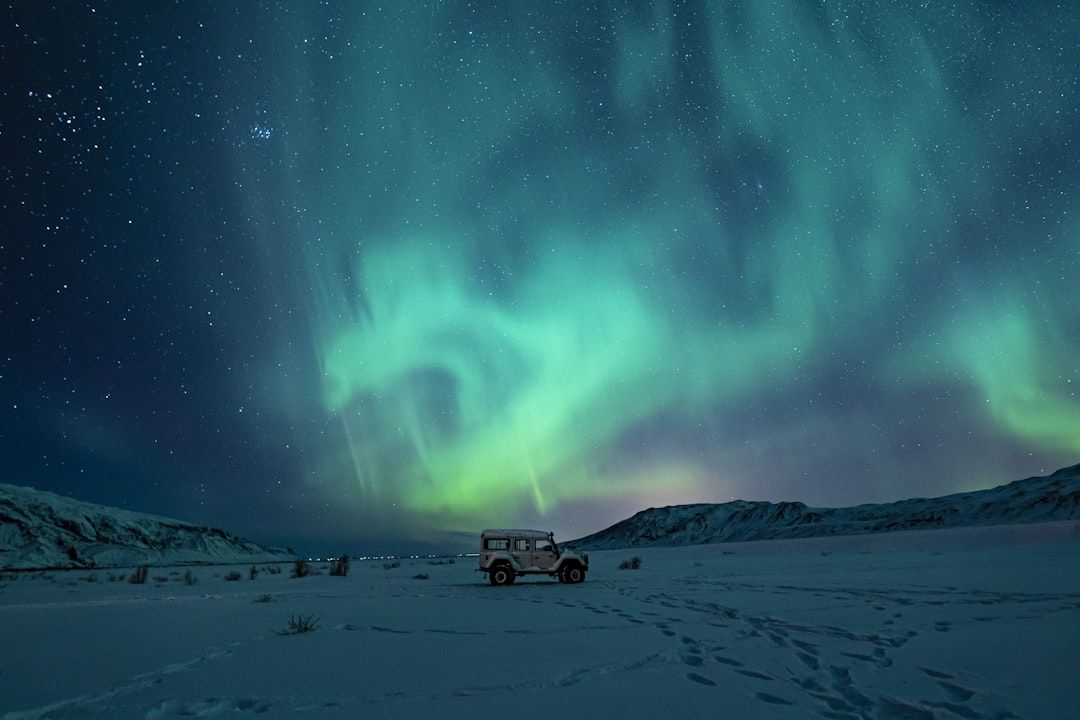
Night One: No Aurora, But the Hot Tub
The aurora forecast was Kp 3, which is moderate. The cloud forecast was 80% cover. The cloud won. I lay in bed from 10pm to midnight watching the sky through the bubble roof, and what I saw was clouds. Not the aurora's fault — the sun had been quiet that week, and even a Kp 3 needs a clear sky to be visible.
What saved the night was the hot tub. It was outside, 5 meters from the dome, fed by geothermal water, and it was 40°C while the air was -3°C. I sat in it for an hour watching the clouds move, and the contrast between the water and the air was the kind of experience that makes you understand why Icelanders built their entire culture around geothermal heat. The steam froze on my hair. My beer stayed cold on the edge of the tub. It was, against all logic, one of the best evenings of the trip.
Night Two: The Aurora Came
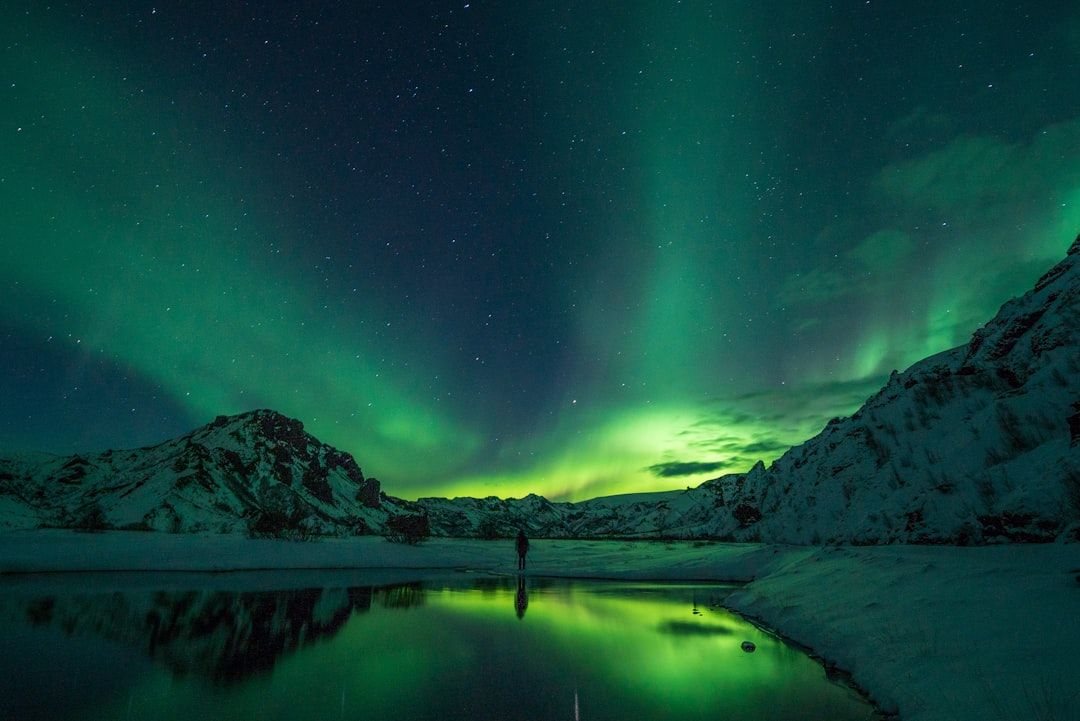
The second night was clear. The forecast was Kp 4, the cloud cover was 10%, and at 11pm I got a text from the owner: "Look up." I was already looking up. The sky had a green band across it that I initially thought was a weird cloud, because the aurora doesn't look like the photos when it starts — it looks like a pale, grey-green smear that you're not sure is real. Then it moved. Then it brightened. Then it was green, unmistakably green, and it stretched from horizon to horizon and moved like something alive.
I watched it from bed through the bubble roof for about 40 minutes. Then I went outside in my base layers and boots and a jacket I'd thrown on, and I stood in the frozen lava field and watched it for another 20 minutes until my fingers went numb. The photos I took with my phone were terrible — aurora photography needs a tripod and a long exposure, and I had neither. The memory is better than any photo would have been anyway. The aurora faded around midnight, and I fell asleep with the light still faintly visible through the bubble.
This was the night that justified the entire trip. €440 for two nights, and this one night was worth all of it. I've seen the aurora in photos my whole life and I was not prepared for how it feels to stand under it in silence in a frozen field in Iceland at midnight. It's not a light show. It's a presence. I don't know how else to describe it.
Night Three: The Gale
I'd booked a third night at the last minute when the forecast improved, and I'm glad I did for night two, but night three was a different story. The wind picked up at 6pm and by 10pm it was gusting at 80km/h according to the Icelandic Met Office. The bubble dome — which is, fundamentally, a large inflatable structure — shook. Not vibrated. Shook. The entire dome flexed in the wind, and the noise was like being inside a drum.
I lay in bed from 10pm to 2am not sleeping, not because I was scared but because the noise was constant and the movement was disconcerting. The dome was bolted to the platform and the owner had texted to say it was rated for 100km/h winds, which was reassuring in theory and less reassuring in practice when the thing you're lying in is flexing around you. At 2am the wind dropped slightly and I slept for four hours. At 7am I woke up, the wind was still strong, and I decided to check out a day early. The owner refunded the last night without question.
This is the thing about Iceland in January that nobody tells you: the aurora is the draw, but the wind is the reality. A bubble dome in a gale is not a relaxing experience. It's not dangerous — these structures are engineered for it — but it's loud and it's physical and it's not what you booked a romantic getaway for. If you're going, go for at least four nights to give yourself a chance of one clear, calm aurora night. Two nights is a gamble. Three nights was almost not enough.
What flights LON to REK actually cost
Prices below are live fares from Aviasales. We may earn a commission if you book through these links, at no extra cost to you.
The cheapest return found right now is €85 with easyJet, departing 7 Nov 2026 (3h 15m each way). See current fares.
Cheapest dates to fly
| Departure | Price | Airline | Stops | |
|---|---|---|---|---|
| 7 Nov 2026 | €85 | easyJet | Direct | Check |
| 31 Oct 2026 | €96 | easyJet | Direct | Check |
| 12 Oct 2026 | €153 | Wizz Air | 1 stop | Check |
| 22 Oct 2026 | €179 | Wizz Air | 1 stop | Check |
| 4 Oct 2026 | €188 | Wizz Air | 1 stop | Check |
Live fares, checked 23 Aug 2026. Prices change daily.
Booking in Reykjavik: where to look
We may earn a commission from the links below, at no extra cost to you. We only list services we would use ourselves.
- QEEQ — Car hire comparison with price drop alerts
- Auto Europe — Car hire across Europe and the UK
- Airalo — eSIM data the moment you land, no SIM swap
- Saily — Travel eSIM with per-country plans
What I'd Tell Anyone Booking Iceland Glamping in Winter
Go for four nights minimum. Two is a gamble on weather. Three is better but still risky. Four gives you a real chance of one clear aurora night and one calm night.
Rent a 4x4. Not a suggestion. A requirement in January. The roads are icy, the wind pushes small cars, and your insurance won't cover a 2WD on F-roads. Book it in advance — Keflavík sells out of 4x4s in winter.
Check vedur.is and road.is daily. The Icelandic Met Office and road authority are more accurate than any weather app. The aurora forecast is at vedur.is/weather/forecasts/aurora. Check it at 8pm, not at noon — forecasts update and short-term is more reliable.
Don't trust the bubble dome in a gale. It's safe, but it's not comfortable. If the forecast shows wind above 60km/h, accept that you won't sleep well and plan accordingly. A cabin with solid walls is a better bet for windy nights, but you lose the aurora-from-bed experience. It's a trade-off.
Would I go back? Yes, in March. March has longer daylight, slightly less wind, and still-decent aurora chances. January was worth it for the one aurora night, but I won't pretend the gale was fun. It was the price of the experience, and I paid it.