Glamping in Patagonia is not a style choice. It is an engineering answer to a specific problem: the wind. Summer gusts through the Torres del Paine massif regularly pass 100 km/h, and a conventional tent in that is a bad night at best. The geodesic dome — the shape the region is now known for — holds up because a sphere has no flat face for the wind to push against. Everything else about Patagonian glamping follows from that.
So the short version: sleep in a dome or a yurt inside or near Torres del Paine on the Chilean side, budget US$250–600 a night in high season, and go in November or March rather than January if you can stand slightly colder mornings. The reasoning is below.
Why domes instead of tents?
Because the shape survives. Geodesic domes distribute load across a triangulated frame, so a gust that would flatten a ridge tent slides over a dome instead. The design in Torres del Paine also borrows from the shelters the Kawésqar people built in the same weather, which is a nicer origin story than most glamping marketing manages.
The practical consequence for you is comfort at a wind speed where camping stops being fun. You get a real bed, a solid floor, and — in the better rooms — a wood stove. What you do not get is silence. A dome in a storm is loud. Bring earplugs; nobody tells you this and everybody needs them.
Where to actually stay
Inside the park: the dome camps
The best-known option sits inside Torres del Paine National Park itself, at the foot of the massif, with domes connected by raised boardwalks so you are not walking through mud in the dark. The distinction that matters when you book is the room tier, and it is a bigger difference than the website implies:
- Standard domes — no heating, shared bathroom blocks. Fine in January. Genuinely cold in October and April, and the walk to the bathroom at 3am in horizontal rain is the part people complain about.
- Suite domes — wood stove, private bathroom, usually a skylight over the bed. This is the version worth paying for, and the only one I would book outside peak summer.
- Loft or premium domes — bigger, better positioned for the view of the towers. Nice, not transformative.
The catch: in-park camps generally sell multi-night packages with guided treks included, not room-only nights. That is not upselling — the park's trail logistics genuinely work better guided — but it means the real decision is a 3, 4 or 7-night programme, not a nightly rate. Expect roughly US$1,200–2,500 per person for a 4-night package including guiding, transfers from Punta Arenas, and all meals.
Outside the park: the yurt camps
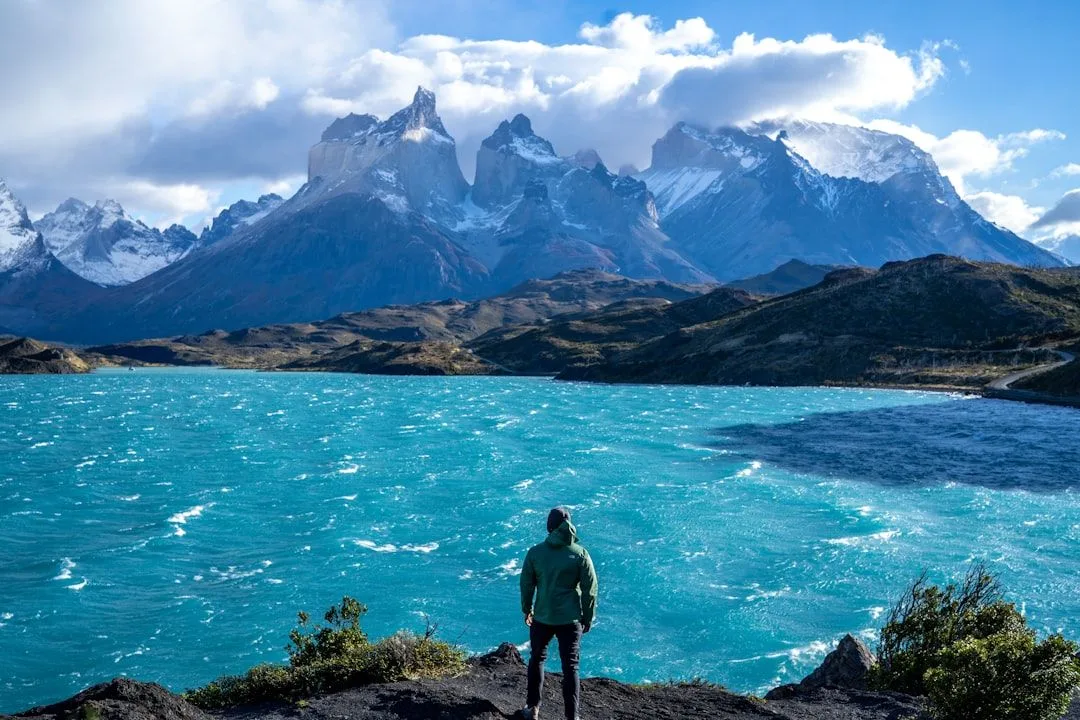
Along Lake Toro and the approach road, several camps use yurts rather than domes — canvas over a lattice frame, on wooden decks, often with a private terrace facing the water. These sell as ordinary nightly stays, which makes them the flexible choice.
Reckon on US$250–450 a night for two, including breakfast. You trade the in-park location for that flexibility: you will drive or be driven 40–90 minutes to trailheads each morning. If your trip is more "see Patagonia" than "trek Patagonia", that trade is worth making.
The Argentine side
Argentine Patagonia has far less purpose-built glamping, and it is worth knowing that before you plan a symmetrical itinerary. El Chaltén, the base for Fitz Roy, is a trekking village of hostels, cabins and small lodges — the Fitz Roy and Laguna de los Tres trails start from the town itself, so you do not need a camp to reach them. El Calafate, the gateway to the Perito Moreno glacier, has estancias that offer something closer to the glamping experience: restored sheep stations with a handful of rooms, horses, and an asado at the end of the day.
If you want domes and yurts specifically, weight your itinerary toward Chile.
When should you go?
The season runs roughly October to April, and the received wisdom — go in January — is the advice I would push back on hardest.
| Period | What you get | Trade-off |
|---|---|---|
| Nov–early Dec | Long days, wildflowers, camps not yet full | Colder nights; some high routes still snowed in |
| Late Dec–Feb | Warmest air, up to ~17 hours of daylight | Peak wind, peak prices, peak crowds on the W trek |
| March | Wind drops noticeably, autumn colour, quiet trails | Daylight shortening fast; colder mornings |
| Apr & Oct | Near-empty park, lowest rates | Reduced services; heating is no longer optional |
March is the answer for most people. The wind that defines a January visit genuinely eases, the light turns, and you are not queuing at viewpoints. Book a heated room and it is the best version of this trip.
What does it cost, honestly?
Patagonia is expensive in a way that surprises people who priced the flight and stopped there. A realistic per-person budget for a week, excluding international flights:
- Accommodation — US$250–600 per night for two in a dome or yurt, or US$1,200–2,500 per person for an all-inclusive multi-night package
- Park entry — Torres del Paine charges foreign visitors a multi-day fee in the region of CLP 35,000–50,000. Buy it online in advance; the queue at the gate is real
- Getting there — fly to Punta Arenas (PUQ), then roughly 3 hours by bus to Puerto Natales, then 2 more to the park. On the Argentine side, fly to El Calafate (FTE)
- Guiding — US$120–250 per day for a private guide if it is not bundled
The single biggest saving available is the season, not the room. Shoulder-season rates at the same camps can run 30–40% below January.
Getting there without losing two days to it
Patagonia punishes vague travel planning, and the transfer legs are where most itineraries leak time. The Chilean approach runs Santiago → Punta Arenas (PUQ) → Puerto Natales → the park. Punta Arenas to Puerto Natales is about three hours by scheduled bus and the services are frequent and reliable; Puerto Natales to the park gate is another two. Camps that quote all-inclusive packages almost always include this leg, which is a real part of their value.
The Argentine approach flies into El Calafate (FTE), which puts you within an hour of the Perito Moreno glacier and about three hours from El Chaltén. Crossing between the two countries overland is entirely doable — the Cerro Castillo crossing links Puerto Natales and El Calafate in roughly five to seven hours by bus — but do not plan it as a half-day. Border formalities are unhurried, and you cannot carry fresh food across.
Two scheduling rules that save real money and grief: build a spare day into the Punta Arenas or El Calafate end, because regional flights cancel for wind more often than you would expect and a missed connection at the end of a package is expensive. And book internal flights before international ones — the domestic legs sell out first in January, and being locked into international dates you cannot fill is the most common way this trip goes wrong.
What to pack that the packing lists miss
- Earplugs. Canvas and wind, every night.
- A proper windproof shell, not a rain jacket. Water is a minor problem here; wind is the whole problem.
- Chilean pesos in cash. Card coverage in and around the park is patchy and the connection drops.
- An eye mask if you go in December or January — 17 hours of daylight is a lot, and dome skylights are not blackout.
- Sun protection. The ozone layer is thin this far south and the burn is fast even on overcast days.
Is it worth it?
Yes, with one condition: book a heated room. The gap between a Standard dome and a Suite dome is the gap between enduring Patagonia and enjoying it, and it is the decision people most often regret making on price. Everything else — which camp, which side of the border, how many nights — is preference. That one is not.
Frequently Asked Questions
Is glamping in Patagonia worth the cost?
Yes, if you book a heated room. Domes and yurts exist here because ordinary tents struggle in 100 km/h wind, so you are paying for shelter that works, not just for style. Unheated rooms outside midsummer are the one version that disappoints.
What is the best month to visit Torres del Paine?
March. The wind eases significantly from its January peak, the crowds thin, autumn colour arrives, and rates drop. November is the second choice — long days and empty trails, but colder nights and some high routes still closed.
Do I need a guide in Torres del Paine?
Not for the day hikes, which are well marked. For the W or O circuits, in-park camps usually bundle guiding into their packages, and the logistics — refuge bookings, transfers, catamaran timings — are genuinely easier handled for you.
Can I glamp on the Argentine side of Patagonia?
Less easily. El Chaltén is a trekking village of hostels and cabins rather than camps, and El Calafate's closest equivalent is a restored estancia. If domes and yurts are the point of your trip, plan around the Chilean side.
How far in advance should I book?
Six months for December to February, when in-park camps sell out entirely. For March or November, two to three months is usually enough, and you will pay noticeably less.