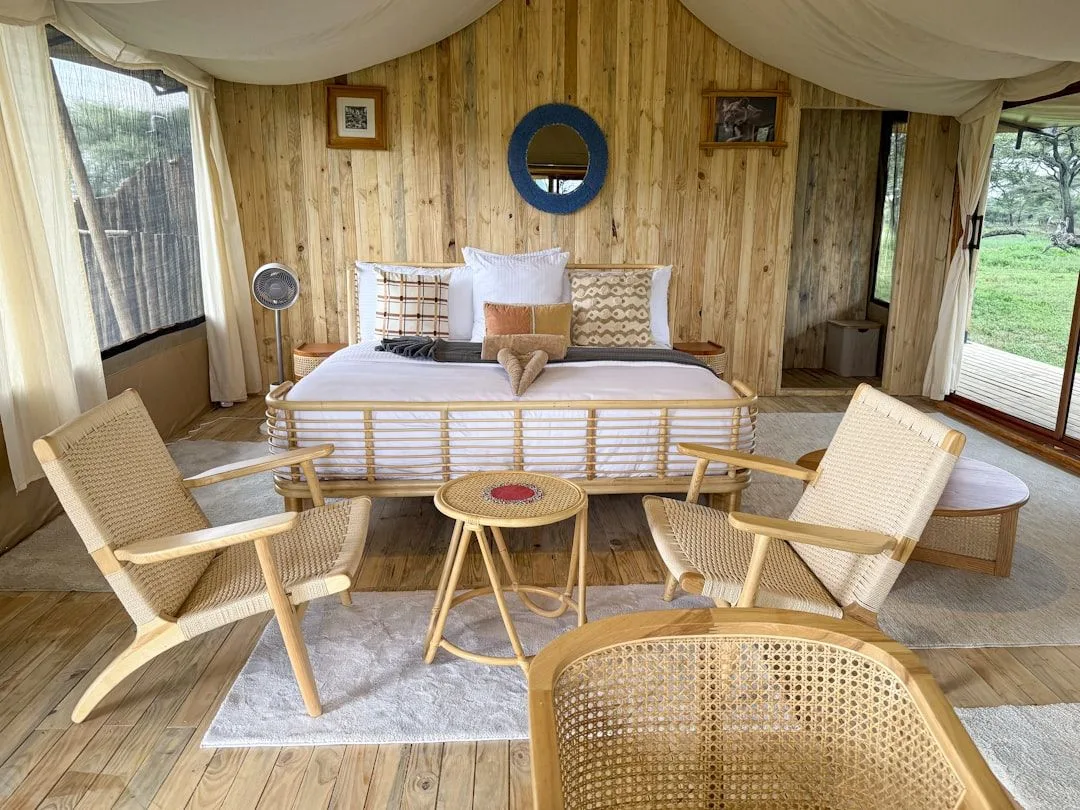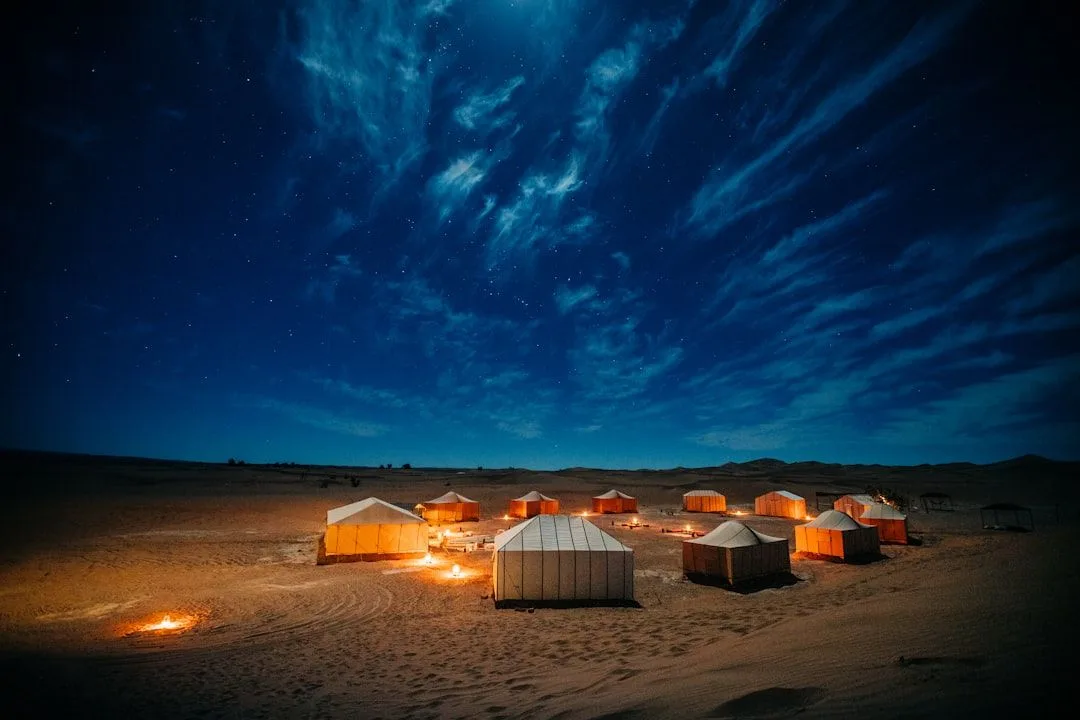
Morocco sells two completely different glamping trips under one word, and booking the wrong one is the most common mistake here. A Sahara camp at Erg Chebbi is a night in a tent among enormous dunes, reached by camel or 4x4, with silence you will remember for years. An Atlas lodge is a mountain stay in a kasbah-style building or a permanent tented suite, cool in summer, with walking from the door. Both are excellent. They are not interchangeable, and they are eight hours apart.
If you have one night, take the desert. If you have a week, do both — but plan the drive properly, because that drive is the part that ruins itineraries.
Where the desert camps actually are
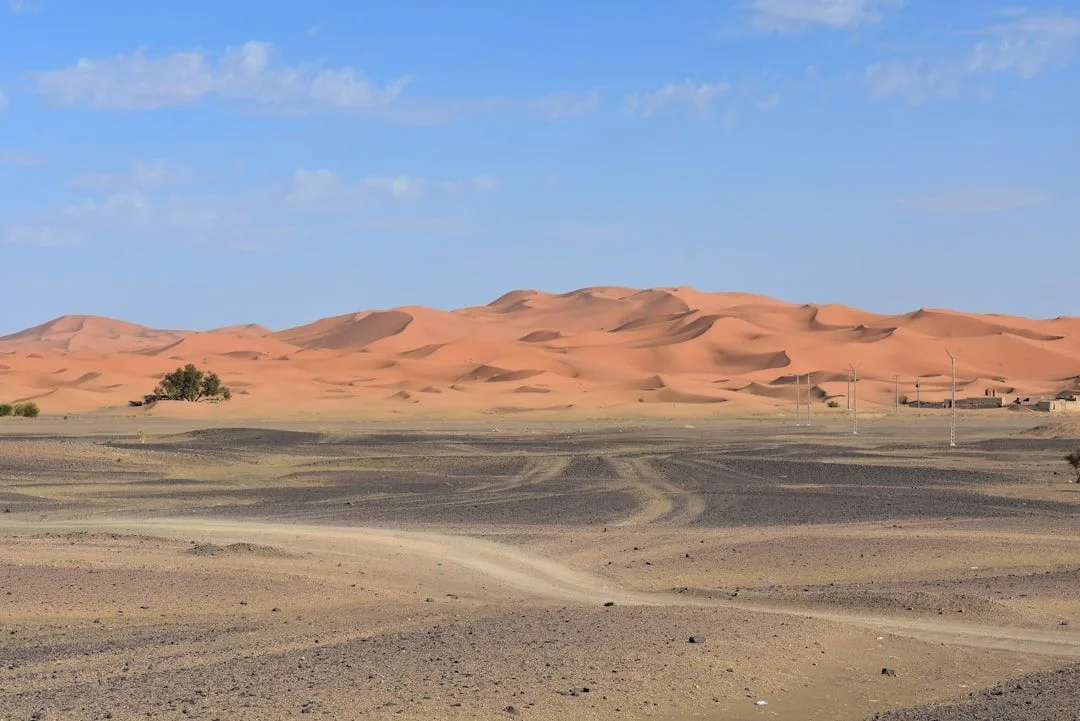
Nearly all Moroccan "Sahara glamping" happens at one of two dune fields, and the difference matters:
- Erg Chebbi, near Merzouga — the tall, photogenic dunes, some rising 150 metres. Camps sit right at the sand's edge, so the walk from vehicle to tent is short. Busier, better serviced, and the one you have seen in photographs.
- Erg Chigaga, beyond M'Hamid — remoter, reached by a rough two-hour 4x4 run across open desert. Fewer camps, fewer people, more of a genuine expedition feel. Harder to reach and harder to leave.
Erg Chebbi is the right choice for a first visit and for anyone travelling with children or on a tight schedule. Chigaga rewards a second trip.
What a good desert camp includes
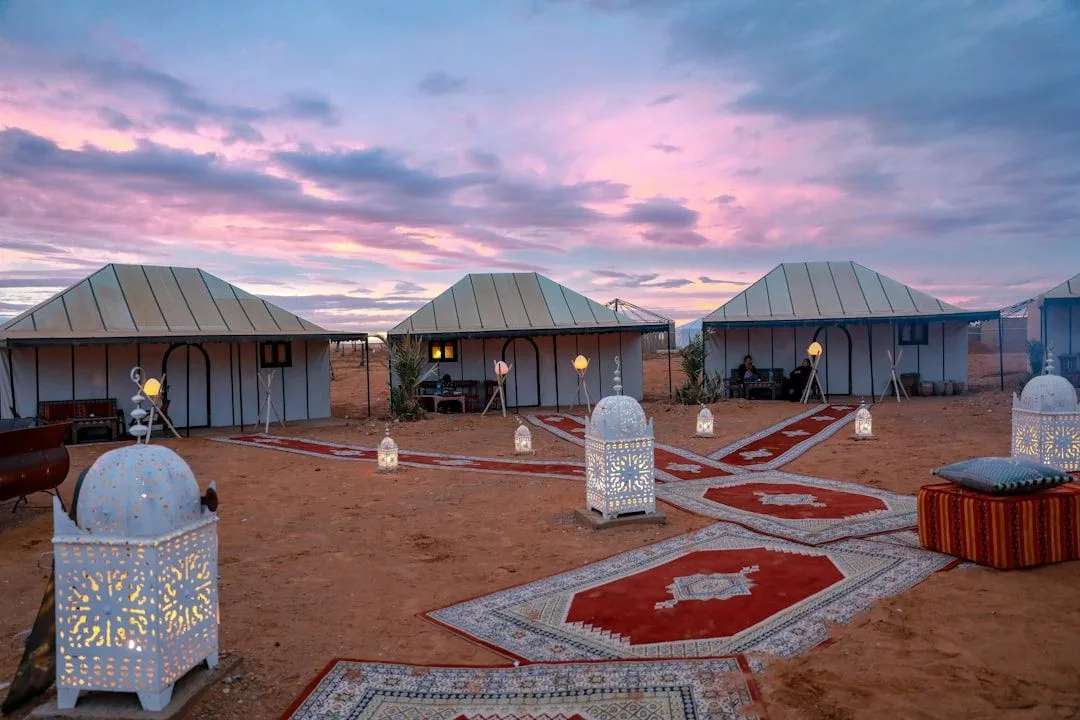
The market splits sharply at roughly €90 a night for two. Below that you are usually getting a shared bathroom block, foam mattresses and generator power that stops at 22:00. Above it you should expect a private ensuite tent with a proper bed, rugs, hot water, and a fire circle where the camp's musicians play after dinner. Dinner and breakfast are almost always included — a tagine cooked on site, eaten communally.
Three things to confirm before you pay, because they vary and none appear in the photographs:
- Heating and bedding for winter. Desert nights from December to February drop close to freezing. Good camps supply heavy blankets and hot water bottles; cheap ones supply neither.
- How you reach the camp. Camel is the classic arrival and takes 60–90 minutes over the dunes. It is genuinely uncomfortable if you have back trouble — ask for the 4x4 transfer instead, which every camp can do.
- Whether the generator runs overnight. If you need a fan in September, or a CPAP machine at any time, this is not a detail.
The Atlas alternative
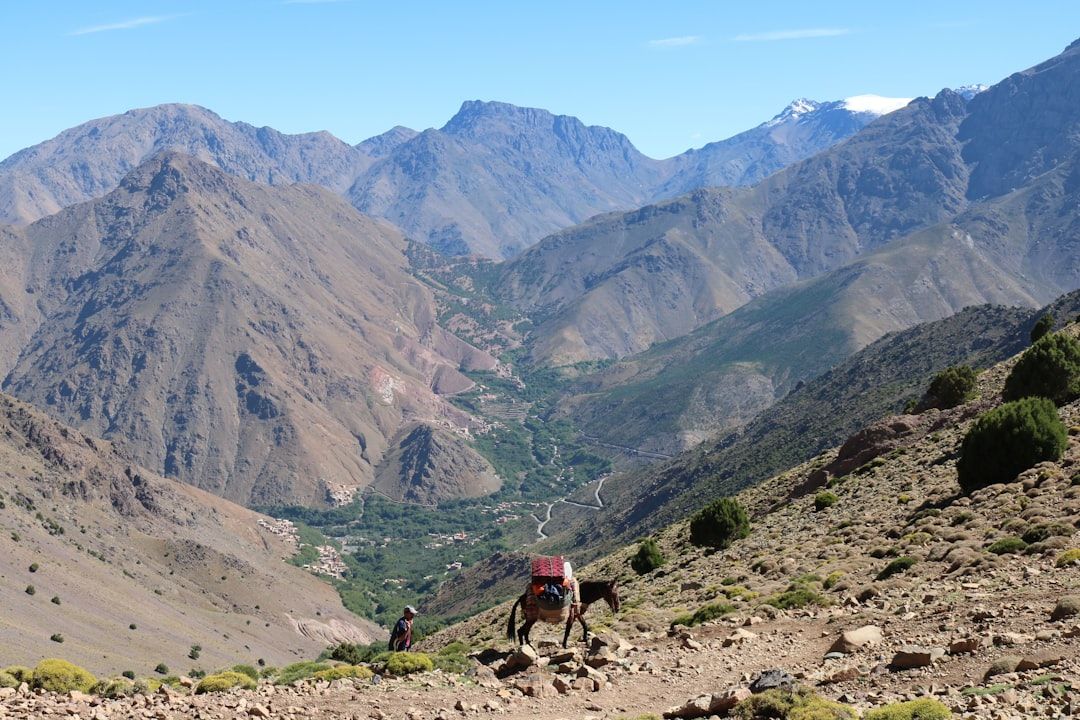
The High Atlas gives you the opposite experience: altitude, cold running streams, walnut trees, and villages built into the hillside. The base is usually the Imlil valley, about 90 minutes from Marrakech, which is also the trailhead for Toubkal — at 4,167 metres the highest peak in North Africa.
Accommodation here is less "tent" and more restored kasbah or lodge with terraces, though several properties now run permanent tented suites on the slopes. Expect €70–200 a night including breakfast and usually dinner, since there is nowhere else to eat.
The Atlas is the better choice in July and August, when the desert is genuinely dangerous in the afternoon and the mountains sit twenty degrees cooler. It is also the better choice if you want to walk: mule-supported day hikes and multi-day traverses start from the door, and hiring a local guide through your lodge costs in the region of €40–60 a day.
When to go
| Season | Desert | Atlas |
|---|---|---|
| Oct–Nov | The best window. Warm days, cool nights, clear skies | Excellent — stable weather, autumn colour |
| Dec–Feb | Pleasant days, near-freezing nights. Check heating | Cold; snow on the high passes, Toubkal needs winter kit |
| Mar–Apr | The other best window; some sandstorm risk | Green, waterfalls running, ideal walking |
| Jun–Aug | Avoid. 45–50°C is common and camps often close | The reason to come — cool, and the only sensible choice |
October and April are the two months where everything works at once. They are also when camps sell out, so book six to eight weeks ahead.
The transfer nobody plans for
Merzouga is a long way from anywhere. Marrakech to Merzouga is 9–11 hours by road over the Tizi n'Tichka pass; Fes to Merzouga is 7–8. Neither is a morning drive, and no camp is worth arriving at exhausted after dark.
Three workable approaches:
- Break the journey at Dades or Todra Gorge. This is what most people should do. It turns a punishing drive into two comfortable ones and adds the best scenery on the route — the Dades switchbacks and the vertical walls of Todra are worth a stop in their own right.
- Fly to Errachidia (ERH), then drive about two hours. Limited schedules, but it removes the worst of the road.
- Take the organised three-day loop from Marrakech. Cheap and efficient, but you will be in a minibus with a fixed group and the camp at the end is usually the budget tier.
If you drive yourself, note that the Tizi n'Tichka is a mountain pass with roadworks and lorries; allow considerably more time than the map suggests, and do not attempt it after dark on a first visit.
What a night in the dunes actually looks like
Camps run to a rhythm, and knowing it helps you pick the right one. You arrive late afternoon, because nobody crosses the sand at midday. There is tea, then most people climb the nearest high dune for sunset — allow twenty minutes and expect it to be harder than it looks, since soft sand takes roughly twice the effort of a path.
Dinner is at eight or nine, communal, usually a tagine and a soup, and it is where the camp either works or does not. A camp with eight tents feels like a dinner party; a camp with forty feels like a hotel restaurant with sand outside. If that matters to you, ask how many tents there are before booking — it is the question that predicts the experience best, and it is almost never in the listing.
Afterwards there is drumming around a fire. Then, if you are lucky with the moon, the reason you came: the sky at Erg Chebbi on a moonless night is as good as anywhere accessible on this continent. Check the lunar calendar when picking dates. A full moon is beautiful and washes out the Milky Way completely.
Sunrise is the other fixed point, and it is worth the alarm. The dunes change colour through about four distinct stages in twenty minutes, and the camp is quiet because half the guests slept through it.
Practical notes worth having
- Cash. Merzouga has ATMs but they run dry, and camps in the dunes are cash-only for extras. Draw dirhams in Erfoud or Rissani on the way in.
- A scarf or shemagh. Not costume — wind-driven sand is constant on the dune crests and a wrapped face is the difference between enjoying sunrise and enduring it.
- Sandals you can empty. Trainers fill with sand within minutes.
- Tip in the local currency, in cash. Camp staff, musicians and camel handlers are usually separate people; budget 50–100 MAD each.
- Khamlia is worth the twenty minutes. The village south of Merzouga is the home of Gnawa music, and hearing it there rather than as dinner entertainment is a different thing entirely.
Which one should you book?
For a first Moroccan trip in autumn or spring: one or two nights in an ensuite camp at Erg Chebbi, broken by a stop at Todra, then back through the Atlas with a night in Imlil. That sequence gives you both landscapes and never puts more than five hours of driving in a single day.
For a summer trip: skip the desert entirely and stay in the mountains. It is not a compromise — the Atlas in August is the better half of Morocco anyway.
Frequently Asked Questions
How much does a Sahara desert camp cost?
Around €90 a night for two is the threshold where you get a private ensuite tent, a real bed and hot water, with dinner and breakfast included. Below that expect shared bathrooms and generator power that stops at night. Luxury camps run €150–300.
What is the best time of year for glamping in Morocco?
October–November and March–April, when the desert is warm rather than dangerous and the Atlas is stable. Avoid the Sahara from June to August, when 45–50°C is normal and many camps close; go to the mountains instead.
How do you get from Marrakech to the desert?
It is a 9–11 hour drive over the Tizi n'Tichka pass. Break it at Dades or Todra Gorge rather than attempting it in one day — the gorges are the best scenery on the route. Flying to Errachidia cuts the driving to about two hours.
Do you have to arrive by camel?
No. The camel trek takes 60–90 minutes over the dunes and is the classic arrival, but every camp can send a 4x4 instead. Ask if you have back problems, are travelling with small children, or are arriving late.
Is the desert cold at night?
In winter, yes — December to February nights approach freezing. Confirm the camp provides heavy blankets and hot water bottles before booking, because the cheaper tiers often do not.