Joshua Tree is the rare destination where the accommodation decision is really a safety decision. The desert is not forgiving of optimism, and the difference between a superb trip and a wretched one is almost entirely down to which months you go and what your site does about temperature.
Season is the whole game
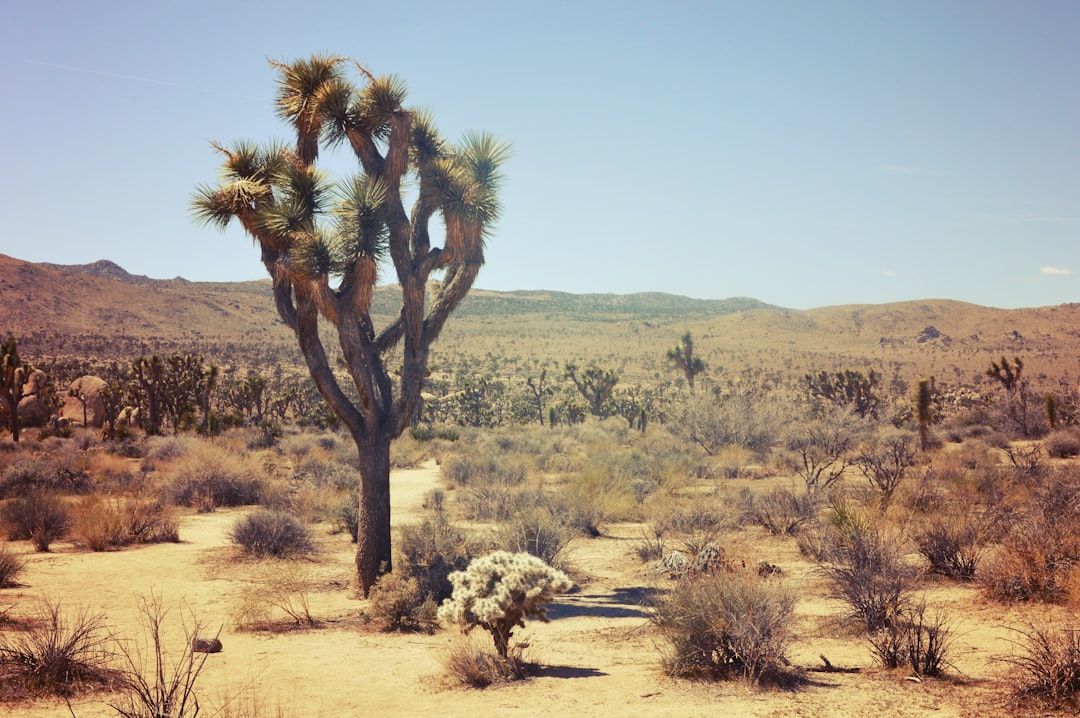
The usable season runs from October to April. Outside it, daytime highs regularly exceed 38C and frequently pass 43C, and a canvas tent in that heat is not a romantic hardship — it is a genuine hazard. If you are looking at a summer date, either book something with real powered air conditioning and accept you will be indoors from mid morning to early evening, or move the trip.
Within the good season, two windows stand out. March and early April can bring wildflowers if the winter rains cooperated, which transforms the landscape and is worth planning around, though it is never guaranteed. October and November give you warm days, cold clear nights and the most reliable stargazing of the year.
The cold is the part people get wrong
Desert air holds almost no moisture, so it holds almost no heat. Once the sun goes down the temperature falls fast — a swing of fifteen to twenty degrees between afternoon and dawn is routine, and winter nights near the park drop to or below freezing.
Practically: bring a warm layer and a hat regardless of what the daytime forecast says, check whether your tent has a heater and whether it runs all night or on a timer, and do not assume that a place selling itself on desert warmth has thought about three in the morning. This catches out more visitors than the heat does.
Dark skies
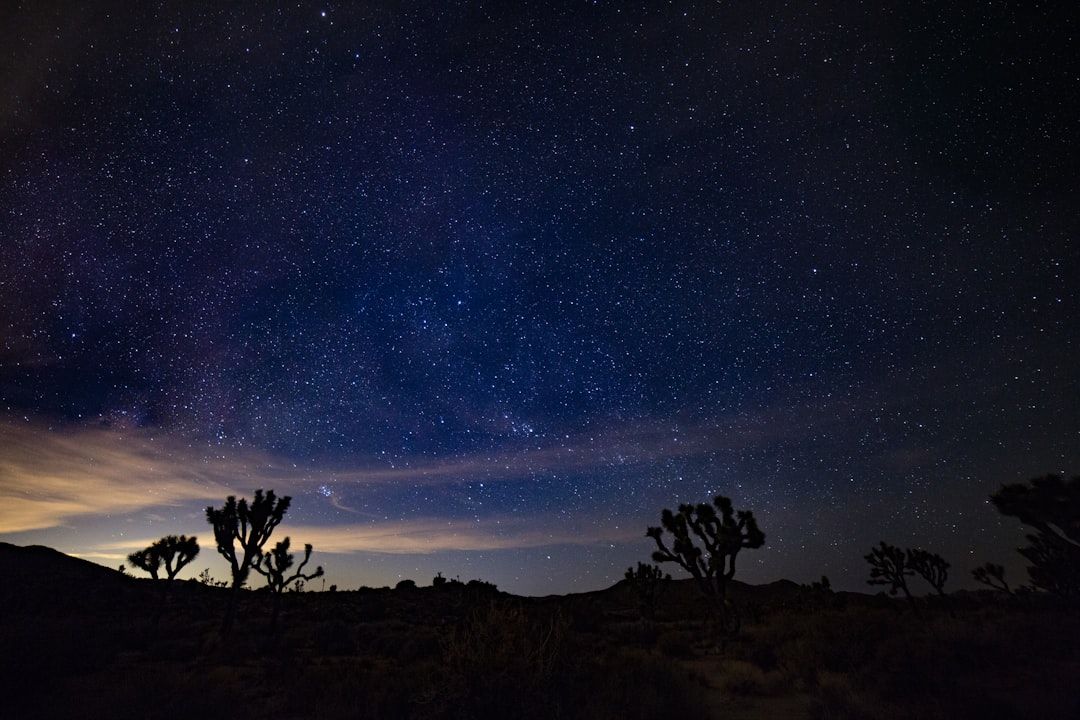
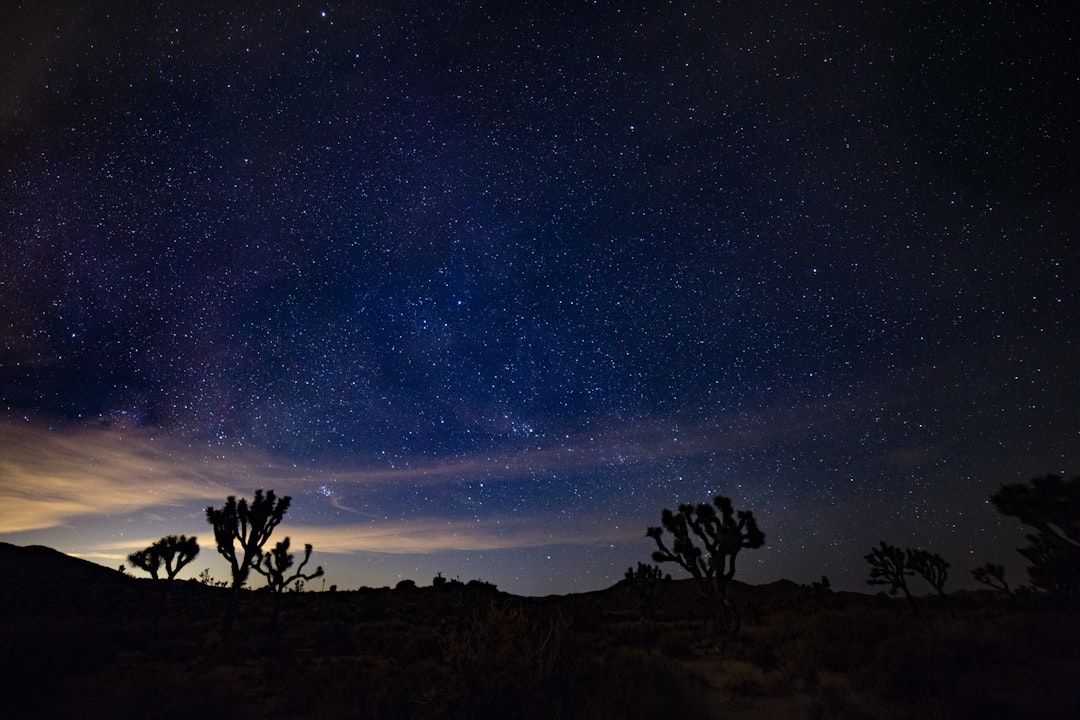
This is the reason to sleep out here rather than drive in for the day. The area is an International Dark Sky Park and the difference between a site out in the open desert and one on the edge of Joshua Tree village or Twentynine Palms is dramatic — town glow is the thing that spoils it.
Time it near a new moon if the sky is your priority; a full moon is beautiful in its own right but washes out everything faint. Give your eyes a genuine twenty minutes to adapt, keep phone screens off or on the dimmest red setting, and look up from somewhere you are not tempted to keep checking your footing.
Choosing a site
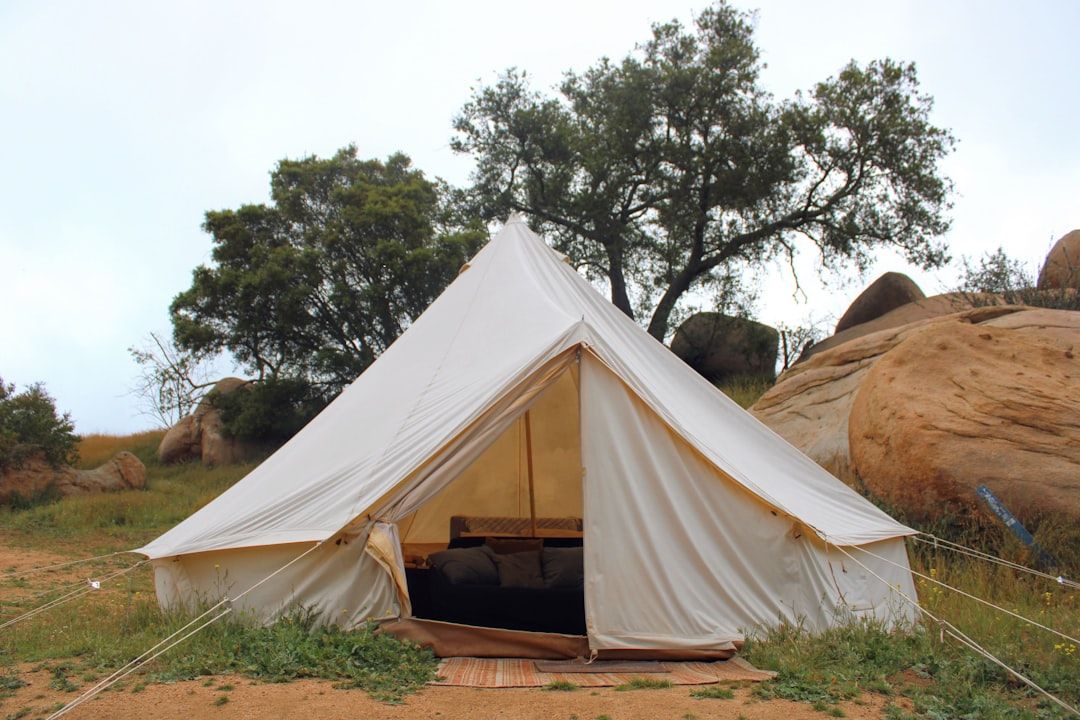
The market here splits into three. Airstreams and hard-sided trailers, which handle temperature best and are the sensible choice at the edges of the season. Canvas safari tents and bell tents, which are the most atmospheric and the most weather-exposed. And built structures — domes, cabins, casitas — which stretch the definition of glamping but solve the heat and cold problem outright.
Whatever the type, the questions that matter are the same: is there shade over the structure or is it sitting in open sun, is there powered cooling or heating and does it run unattended, how far is the bathroom, and how far is the nearest shop. Water and supplies are not something to improvise out here.
Where the sites are
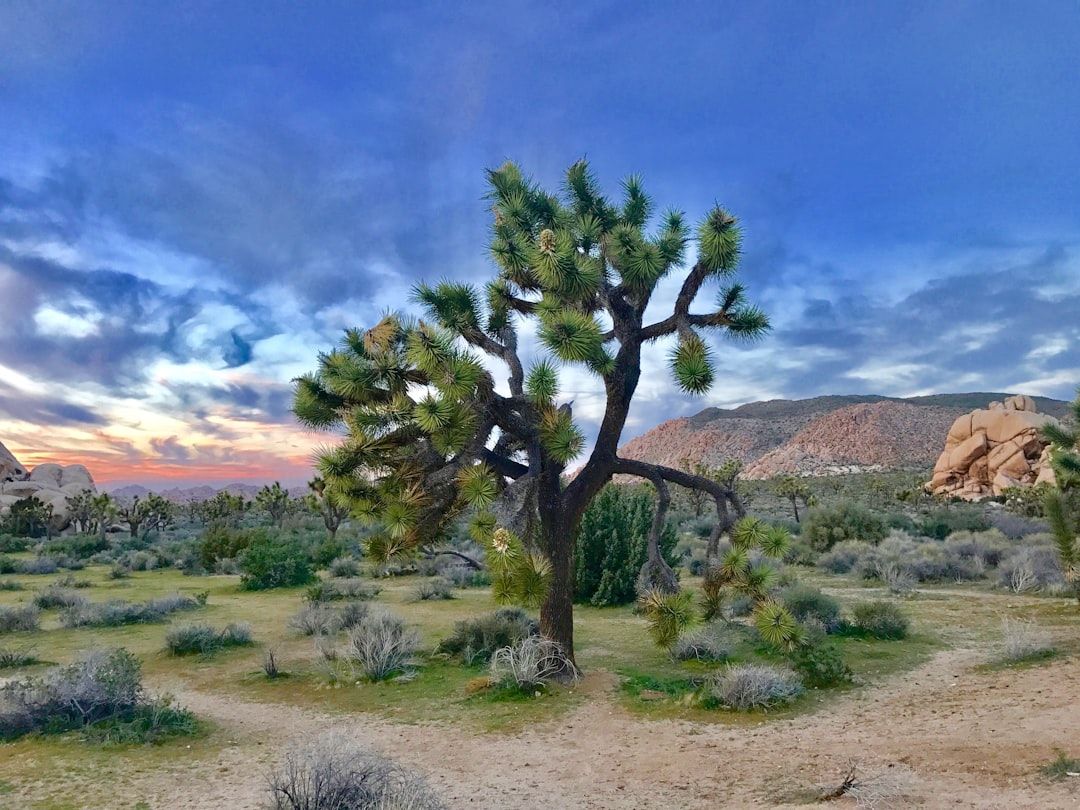
Most cluster in a broad arc north and east of the park, around Joshua Tree village, Yucca Valley and Twentynine Palms, with more remote options scattered further out toward Wonder Valley. Closer in means shorter drives, more light pollution and easier resupply. Further out means better sky, more silence, and a longer run to anywhere if something goes wrong.
The park has three entrances, and which one you are nearest shapes your days more than the mileage suggests, because driving inside the park is slow and the distances between the good stops are large.
Practicalities
You need a car, without qualification. There is no useful public transport, the distances are real, and in desert heat you must never be in a position where walking out is the fallback.
Carry more water than you think you need — the standard advice of several litres per person per day is a floor, not a target, and dry air means you dehydrate without feeling especially sweaty. Fill up before you leave the highway. Download offline maps, because coverage is patchy once you are off the main roads and non-existent in parts of the park. And check the park's own conditions page before you go: road closures and heat advisories are common and they are not issued for fun.