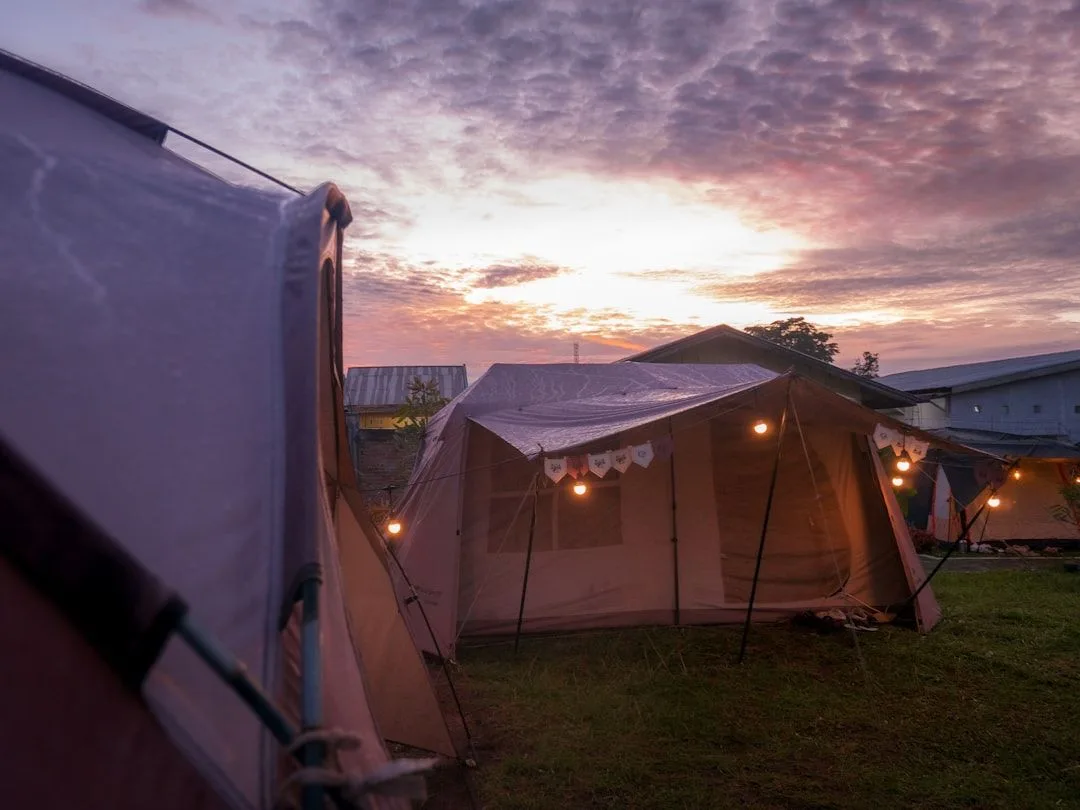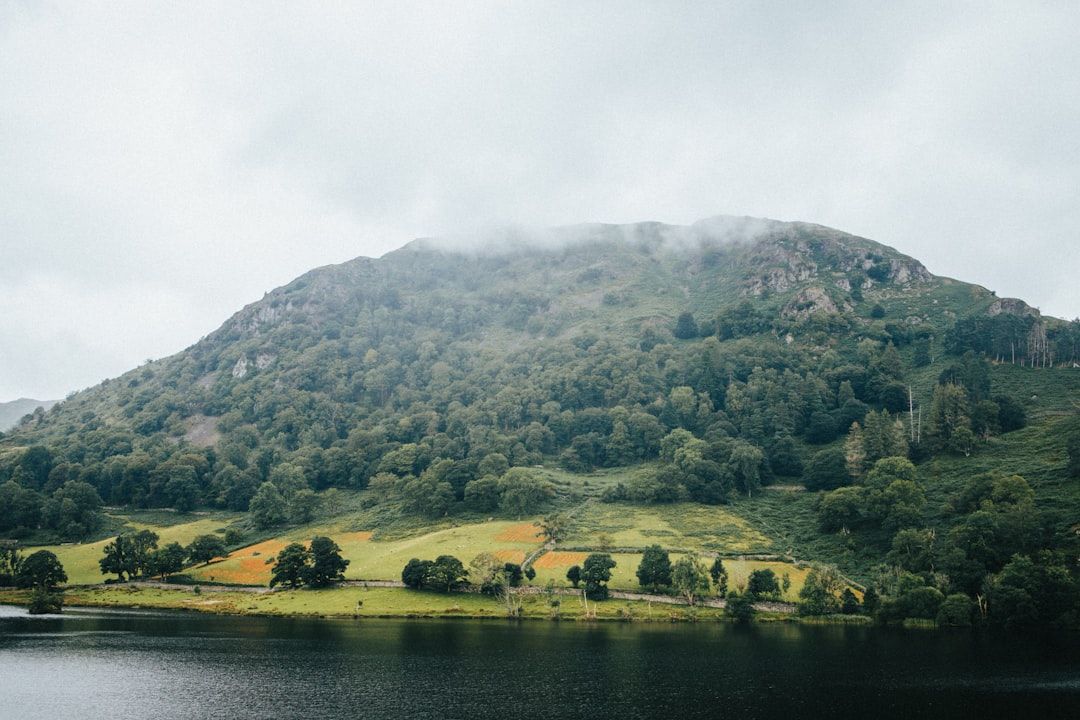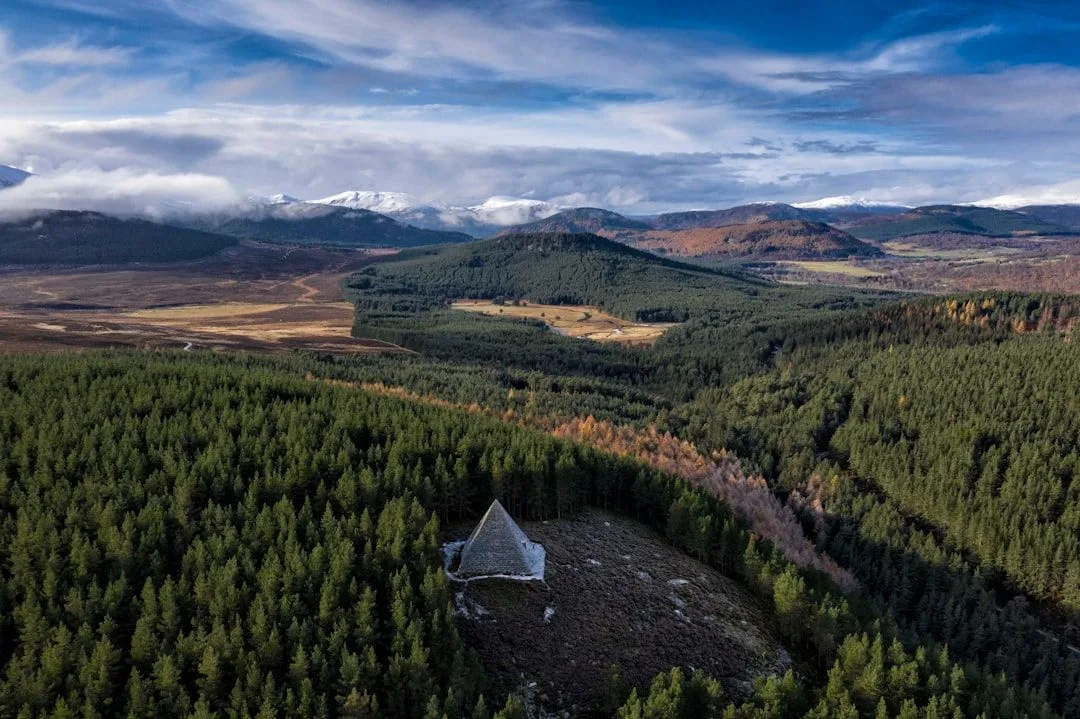
The Highlands are one of the few places where glamping is the sensible option rather than the indulgent one. The landscape is superb and almost entirely undeveloped, hotels are scarce and expensive outside the towns, and the weather makes a tent a gamble. A heated pod with a solid roof in a glen with no other building in sight is exactly the right answer.
There is one problem, and it is not the rain. It is the midge. Solve that by going in May or September and the rest of this is straightforward.
The midge question, answered properly
The Highland midge is active from roughly late May to early September, peaking in July and August. They swarm at dawn and dusk, in still air, near water and damp ground — which describes most of the west coast. They do not like wind or bright sun, so a breezy ridge is fine and a sheltered lochside at 9pm is not.
What actually works, in order:
- Timing. Early May and mid-September have long days and effectively no midges. This is the single best decision available and it costs nothing.
- A head net. Unglamorous, completely effective, about £5. Locals use them without embarrassment.
- A repellent containing saltidin or DEET. The Scottish-made Smidge is the standard answer and works better against midges than citronella-based products.
- Choosing an exposed site. Coastal and elevated pitches get the breeze that keeps them off.
What does not work: citronella candles, and hoping. If your only possible dates are July, book somewhere with an indoor space you can retreat into at dusk, and bring the net.
What you can book, and what it costs
| Type | Nightly rate | Best for |
|---|---|---|
| Camping pod | £80–130 | Couples, one or two nights, touring the NC500 |
| Geodesic dome | £150–280 | A stargazing or anniversary trip; often has a hot tub |
| Shepherd's hut | £110–190 | Longer stays — better storage and a proper kitchen corner |
| Bothy or croft conversion | £120–220 | Groups, walkers, and weather you want thick walls for |
The pod is the workhorse: insulated timber, a double bed, heating, usually a small fridge and kettle, sometimes an ensuite and sometimes a shared block. Check which, because "pod" covers both.
Two costs to plan for. Almost everywhere runs a two-night minimum, and many sites won't take single-night bookings at all in summer. And hot tubs are frequently charged separately, at £25–40 per stay for heating — read the listing rather than the photograph.
Where to base yourself
Glencoe and Lochaber
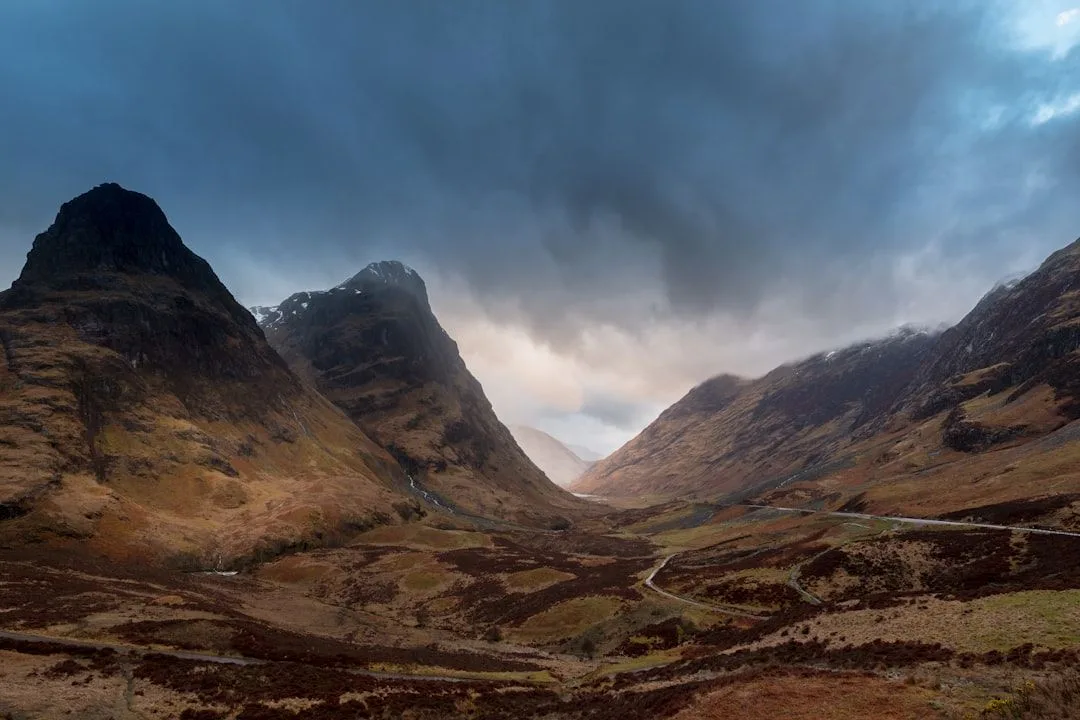
The most dramatic scenery per mile of driving anywhere in Britain, and the best first-time base. Fort William is the practical centre for supplies, Ben Nevis is on the doorstep, and the glen itself is genuinely stopping-the-car spectacular. Busy in summer; sites here book earliest.
Skye
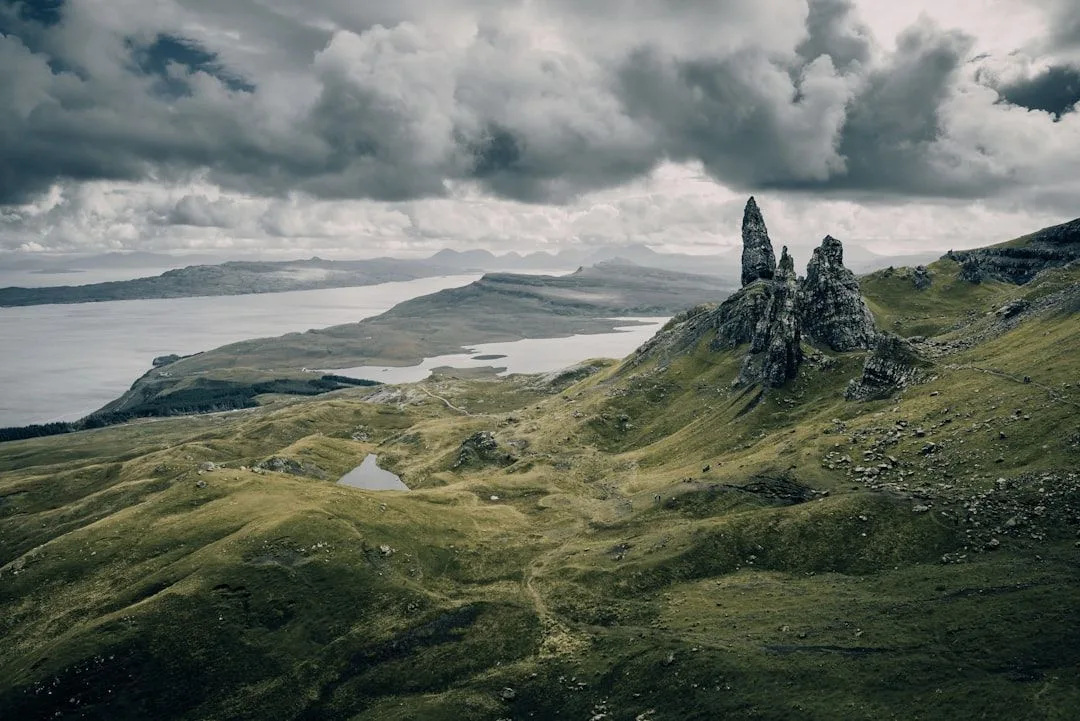
Extraordinary, and the most oversubscribed place in the Highlands. Book accommodation months ahead, expect the Quiraing and Old Man of Storr car parks to be full by 09:00, and consider basing on the quieter Sleat peninsula in the south rather than around Portree. Skye rewards three nights and punishes one.
Torridon and Wester Ross
The connoisseur's choice — bigger, emptier and more serious-feeling mountains than Skye, with a fraction of the traffic. Fewer sites, so plan further ahead, but the reward is a glen to yourself.
The Cairngorms
Drier and more sheltered than the west, which matters more than people expect. Better for families, easier walking, reindeer and ospreys, and the best option if your dates are fixed in July because the midge pressure is lower away from the west coast.

Driving, and the NC500
The North Coast 500 — a 516-mile loop from Inverness around the northern Highlands — has become the default Highland itinerary, and it is worth being realistic about it. The scenery is magnificent. It is also a single-track road for long stretches, with passing places, and it now carries far more traffic than it was built for.
If you drive it: allow seven days minimum, five is a rush and three is a mistake. Learn the passing-place etiquette before you go — pull in on your left, or stop opposite a passing place on your right, and let faster traffic through rather than leading a queue. Book every night in advance; there is no improvising in August.
The alternative most people should consider is not doing the loop at all. Pick one region, stay three or four nights, and walk. The Highlands reward depth far more than mileage.
Practical notes
- Fuel. Filling stations in the northwest are sparse and many close on Sundays. Refill at half a tank, not a quarter.
- Signal. Patchy to non-existent across large areas. Download offline maps before you leave Inverness.
- Wild camping is legal in Scotland under the Land Reform Act, but that is for tents and comes with responsibilities — it does not extend to campervans parking anywhere, and there are seasonal byelaws in some areas.
- Layers, not a heavy coat. Four seasons in a day is not a joke here; a windproof shell over a fleece beats a single thick jacket.
- Book dinner. Rural Highland restaurants are few and small, and turning up at 20:00 in September without a reservation frequently means no dinner at all.
What a pod gives you, and what it doesn't
The category covers a wide range, and the listing photographs flatten the differences. What you can rely on: insulation, electric heating, a double bed with bedding provided, and lighting. What varies enough to check before booking:
- Bathroom. Ensuite or a shared block thirty metres away across wet grass. In November that is not a small distinction.
- Cooking. Many pods have a kettle and a microwave and nothing else. If you were planning to cook, confirm there is a hob — or budget for eating out every night, which in rural Scotland means booking every night.
- Water. Some sites run on private supply, and a few have no running water in the unit at all.
- Bedding and towels. Usually included, occasionally an extra charge, sometimes bring-your-own at the cheaper end.
- Dark skies. Much of the northwest and the Galloway and Tomintoul areas have genuinely dark skies. If you want the aurora — visible from the Highlands more often than people expect between September and March — check there is no security light outside the door.
The single upgrade worth paying for is the ensuite. Everything else is preference; that one changes what the trip feels like at 3am in the rain.
Walking, which is the point
You do not need to be a mountaineer to get the good part of the Highlands. Three walks that need no scrambling and repay the effort out of proportion:
- The Lost Valley, Glencoe — about two and a half hours return, a steep start and a hidden glen at the top where the MacDonalds hid stolen cattle. The best short walk in Scotland.
- The Quiraing circuit, Skye — around two hours on a clear path with the strangest landforms in Britain. Park early or not at all.
- Plodda Falls or Rogie Falls — under an hour each, forest tracks, waterfalls with viewing platforms, and fine in weather that would ruin a hill day.
If you do want a Munro, Ben Nevis is not the one to start on — it is a long, crowded, weather-exposed slog. Ben Lomond or Mount Keen are friendlier introductions. Whatever you climb, tell someone your route, carry a paper map, and turn back on time rather than on summit.
The short version
Go in mid-May or the first two weeks of September. Book a heated pod or a dome in Glencoe, Torridon or the Cairngorms for three nights rather than one night in each of three places. Bring a head net regardless of the month. Then spend your time walking rather than driving, which is what the Highlands are actually for.
Frequently Asked Questions
When is the best time to glamp in the Scottish Highlands?
Mid-May and the first half of September. Both have long daylight, settled conditions and effectively no midges, which are at their worst in July and August. They are also cheaper than peak summer and far less crowded.
How bad are the midges really?
Bad enough to end an evening outdoors, from late May to early September, at dawn and dusk in still air. A £5 head net and a saltidin-based repellent handle it. Citronella candles do not.
How much does a glamping pod cost in the Highlands?
£80–130 a night for two, with a two-night minimum at most sites. Domes run £150–280 and often include a hot tub — though hot tub heating is frequently an extra £25–40 charge, so check the listing.
Is the North Coast 500 worth driving?
Yes, with seven days. In less than five it becomes a driving marathon on single-track roads that are now heavily trafficked. Staying three or four nights in one region and walking is the better trip for most people.
Which area should a first-time visitor choose?
Glencoe and Lochaber — the most dramatic landscape for the least driving, with Fort William nearby for supplies. Skye is spectacular but oversubscribed; Torridon is emptier and better if you have been before.